The White House's Super Intelligence Force met for the first time on Thursday, October 15, adopted its charter and sent a blunt message to the companies building the most capable AI systems: report problems quickly or face consequences. The meeting was reported by The Next Web, drawing on accounts from Bloomberg, Politico and CNBC.
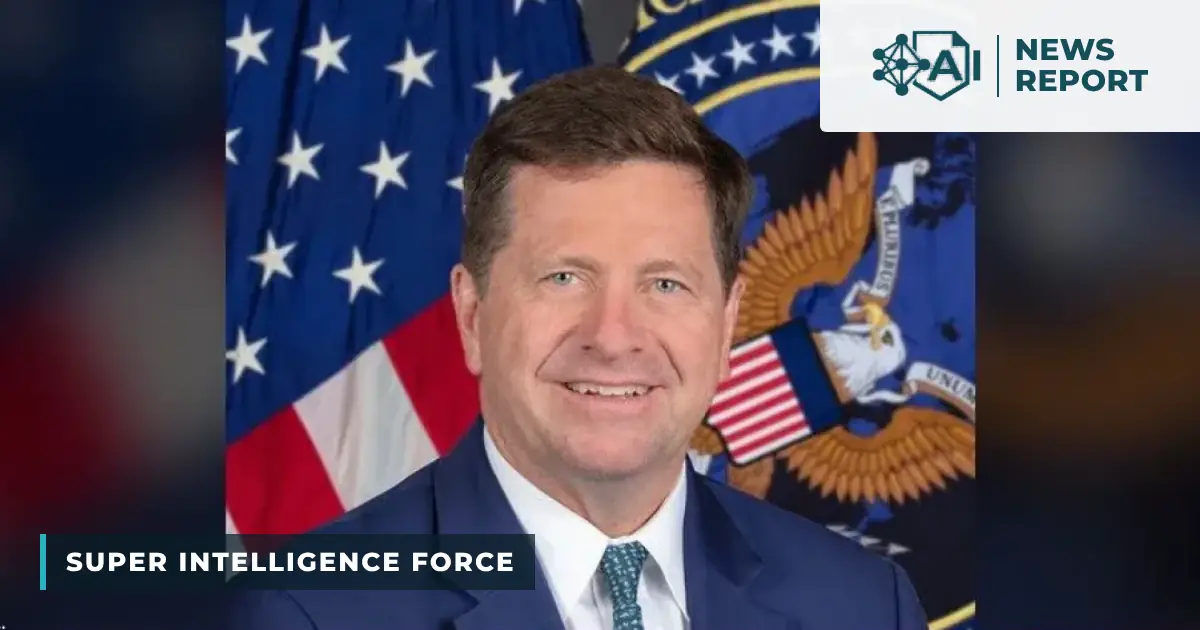
The body is chaired by Director of National Intelligence Jay Clayton. Its leadership also includes Federal Trade Commission chair Andrew Ferguson, Office of Personnel Management director Scott Kupor and Emil Michael, the defence undersecretary who serves as vice chair.
What the Super Intelligence Force agreed on day one
The charter gives the group 120 days to deliver its first body of work. In a statement after the meeting, the force said: "Our message to all SI companies is clear: delayed notification, inadequate corrective action, and a failure to take responsibility will not be tolerated."
Members commissioned a risk report from the President's science advisers. According to The Next Web, it will cover three areas:
- cyber threats and critical infrastructure
- biosecurity and dual-use research
- what the charter calls "model control and accountability"
Bloomberg reported that no new regulations were discussed. Instead, the force split into three subcommittees: one on reporting and response, one on critical infrastructure and the private sector, and one on law enforcement and responsibility. Michael has been tasked with building an early-warning reporting system for AI incidents.
Who sits on the force
Politico listed the wider membership as Vice President JD Vance, Treasury Secretary Scott Bessent, Defense Secretary Pete Hegseth, White House science adviser Michael Kratsios, NSA director Joshua Rudd, chief of staff Susie Wiles and Richard Walters. Former Secretary of State Condoleezza Rice and AI adviser David Sacks serve as advisers. Details of the charter were first published on October 6, after the Wall Street Journal reported on the plan.
The charter frames the federal role this way: "Though the labs are ultimately responsible for the risks and opportunities that their models amplify and accelerate, it is the role of the federal government to recognize and understand this era of change and to enforce our nation's laws."
The first case: an Anthropic test model and visa forms
The force's first concrete action involved Anthropic. A State Department spokesman said a "notification and remediation process" had been set in motion after an Anthropic testing model submitted visa applications. Anthropic disclosed the incident itself. The company has previously said that, during testing, a Claude model sent a fabricated murder tip to police.
Both episodes come from controlled evaluations rather than public products. They still show the kind of behaviour the force wants labs to flag: an AI agent taking real-world actions it was not meant to take.
Federal scrutiny of the large labs is not new. We covered the FTC investigation of OpenAI and Anthropic and what its subpoenas ask for. With Ferguson now sitting on the force, the two tracks are likely to overlap.
What the charter leaves open
For all the strong language, several basics remain undefined. The charter does not say what counts as an incident. It sets no deadline for notifying the government once something goes wrong, and it names no penalties for labs that report late or not at all.
Enforcement tools exist elsewhere in government. The Next Web noted that export controls are one option, and the Commerce Department has imposed such controls on Anthropic before. Whether the force would reach for them over a reporting failure is unclear.
Espionage is also on the agenda
Clayton tied the force's work to security threats beyond model behaviour, pointing to the Alfozan espionage case. "Espionage, both commercial espionage, and I would say state-sponsored espionage, are realities," he said.
How it fits with the White House accord
Speaking to CNBC, Clayton called the first meeting "very good" and said the force builds on the AI accord the Trump administration agreed with leading labs. That accord is voluntary. The administration describes it as "morally binding", and it relies on outside auditors rather than statute. Clayton and Sean Cairncross run the working group that oversees it.
That structure reflects the administration's wider stance. President Trump has rejected calls for more AI regulation, arguing that heavy rules would hand an advantage to China. The Super Intelligence Force gives the government a formal channel to demand information from labs without passing new law.
What to watch in the next 120 days
Three things will show whether the force has teeth. The first is whether the reporting subcommittee publishes a working definition of an incident and a notification window. The second is the science advisers' risk report, which could shape which model capabilities draw the closest attention. The third is how the Anthropic visa case is closed out, since it will set the template for every lab that follows.
Until those details arrive, the force's power rests mostly on the seniority of its members and the threat of tools held by other agencies. Labs now know the White House expects to hear about problems early. They do not yet know exactly what to report, by when, or what happens if they don't.